Industrial floors carry the load of the business — literally. Forklift traffic, pallet jacks, rolling racks, fluids and constant cleaning all wear on unprotected concrete. A properly specified coating system makes the floor easier to maintain, brighter to work on and easier to organize with clear lines and zones.
Our approach to industrial work is practical: understand the operation, identify the exposures, then recommend a system and schedule that suits your facility. That might be a high-build epoxy, a urethane or polyaspartic topcoat, safety striping over a sealed slab, or a combination across different zones.
Industrial applications
Warehouses and distribution
Aisles, staging areas and docks with line striping and zone markings.
Manufacturing and assembly
Production floors that need a cleanable surface and clear safety demarcation.
Fleet and service facilities
Bays and shops exposed to fluids, hot tires and heavy equipment.
Hangars and storage
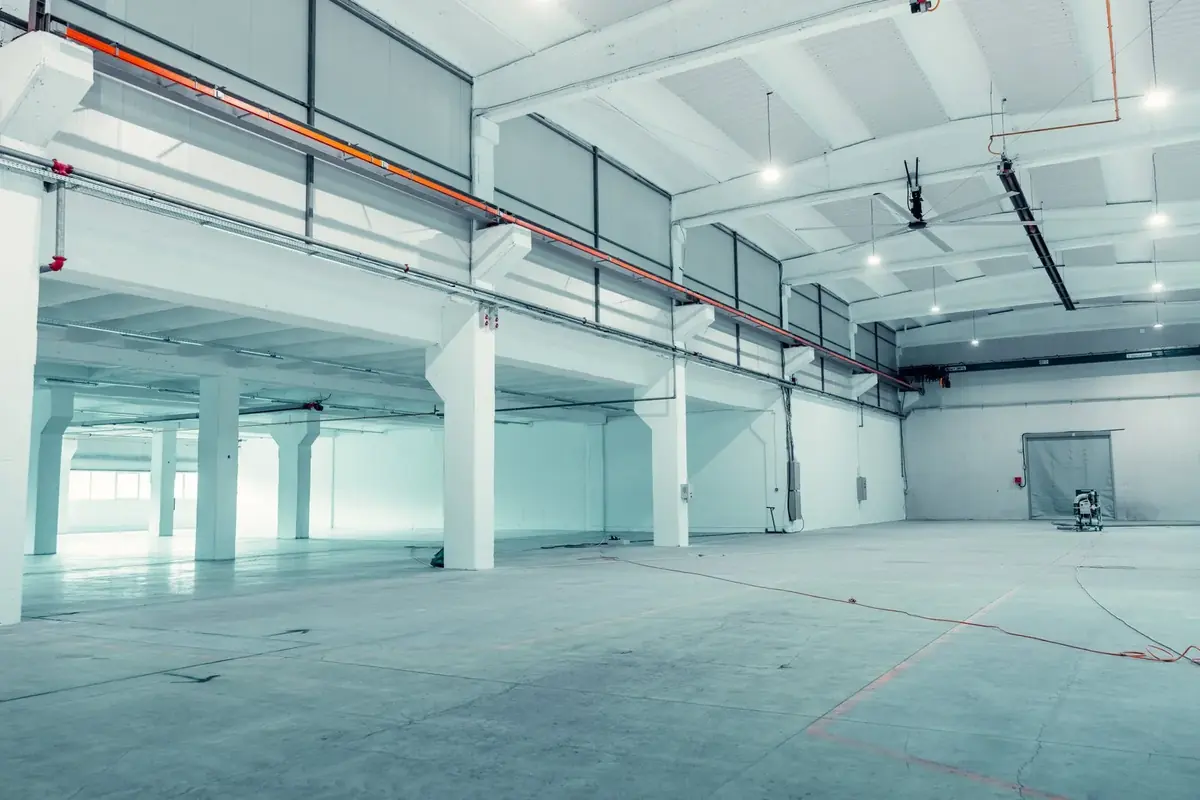
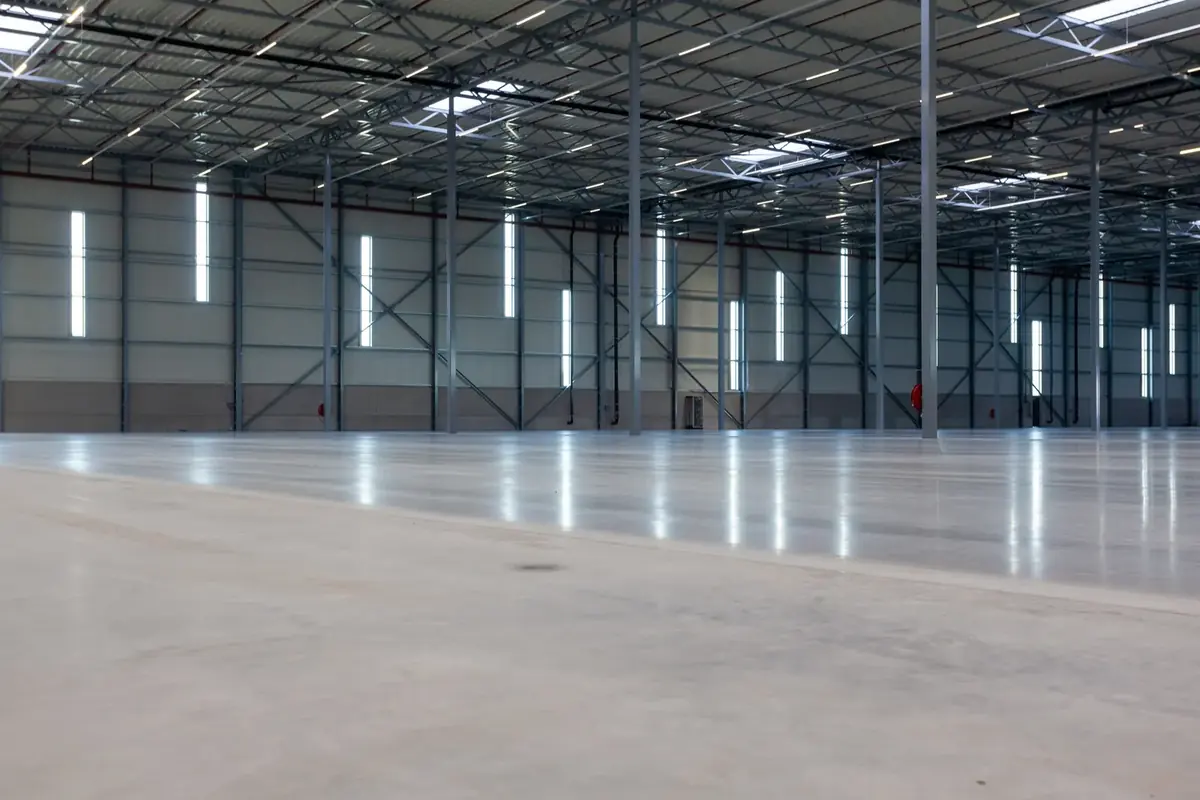
Large-format floors that benefit from brighter, light-reflective finishes.
Industrial project approach
- 01
Operations walk
We look at traffic patterns, loads, chemicals, cleaning equipment and areas that must stay operational.
- 02
System by zone
Different areas may need different systems — heavier builds for traffic aisles, lighter treatments elsewhere.
- 03
Preparation
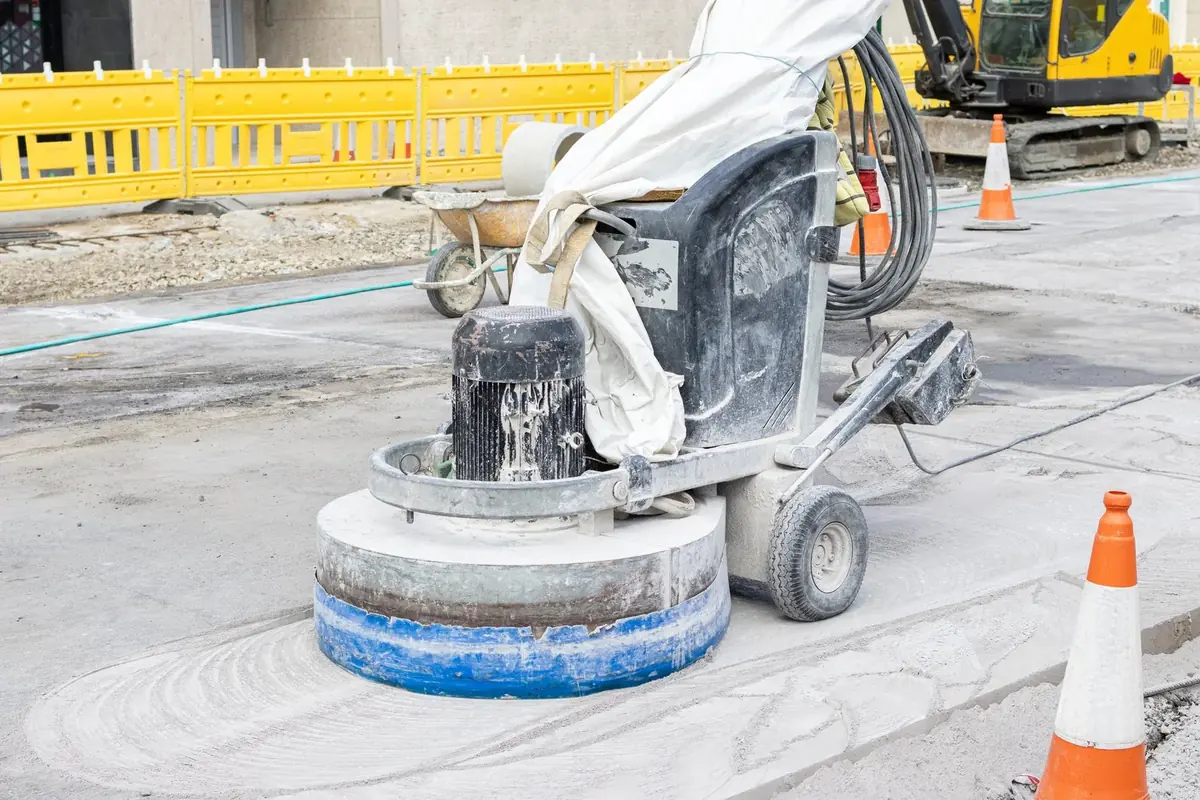
Dust-controlled grinding or shot blasting, joint and crack repair, and contamination treatment.
- 04
Installation and striping
Coatings are installed in phases, followed by safety lines, walkways and zone markings.
Industrial options
- High-build epoxy systems
- Urethane and polyaspartic topcoats
- Safety striping and walkways
- Anti-slip textures for wet areas
- Light colors for brighter facilities
- Sealed and densified concrete

What drives the specification
The right system depends on loads, wheel types, chemicals, temperature and cleaning. We ask detailed questions because those answers change the specification. Where chemical exposure is significant, we will review the specific chemicals against product data before recommending a system.
Joints in industrial slabs move. We treat control joints with appropriate fillers or leave them honored through the coating, and explain how joint maintenance fits into your facility plan.
Not sure this is the right system? Our coating systems guide compares the options side by side, or we can recommend one after seeing your floor.
Industrial Concrete Coatings — frequently asked questions
Can you coat our facility in phases?
Yes. We plan zones and sequences so operations can continue, including after-hours and weekend work.
Do you add safety striping?
Yes. We can add aisle lines, walkways, hatching and zone markings as part of the coating project or over an existing sealed floor.
How do you control dust?
Our grinding equipment is connected to industrial vacuums, and we isolate work areas as needed to keep dust contained.