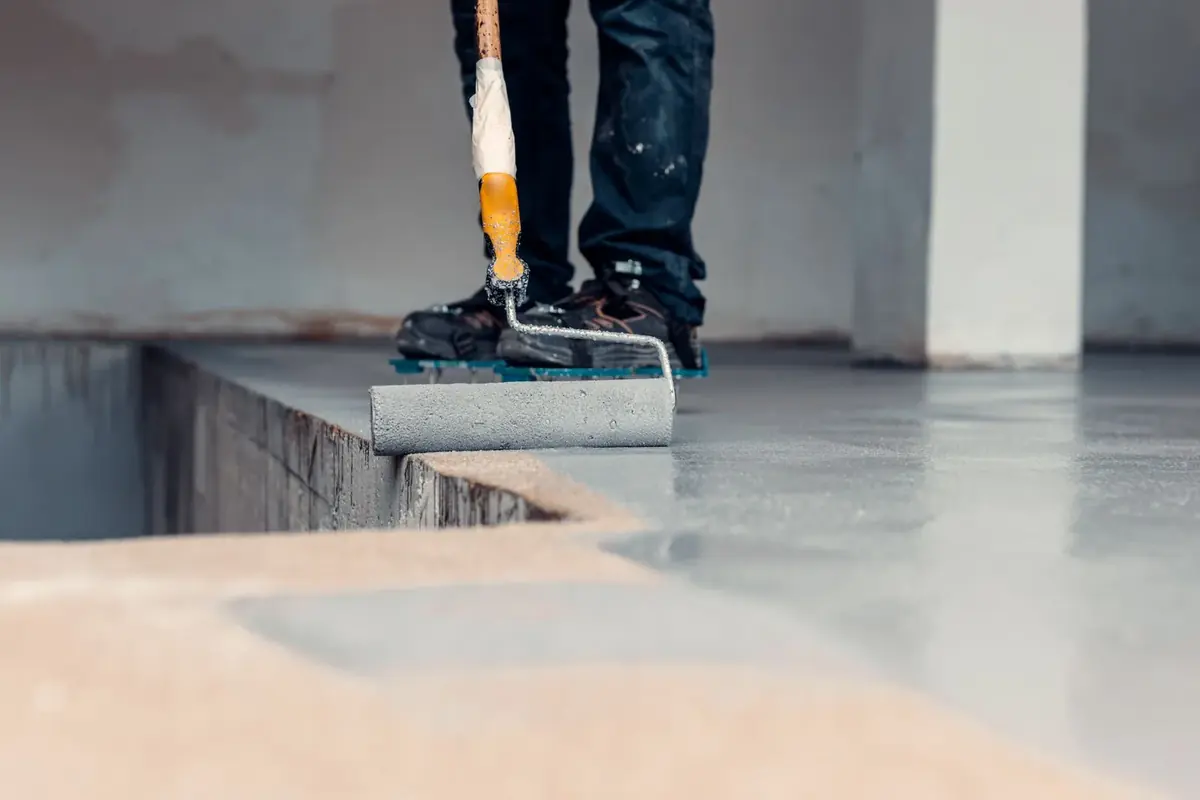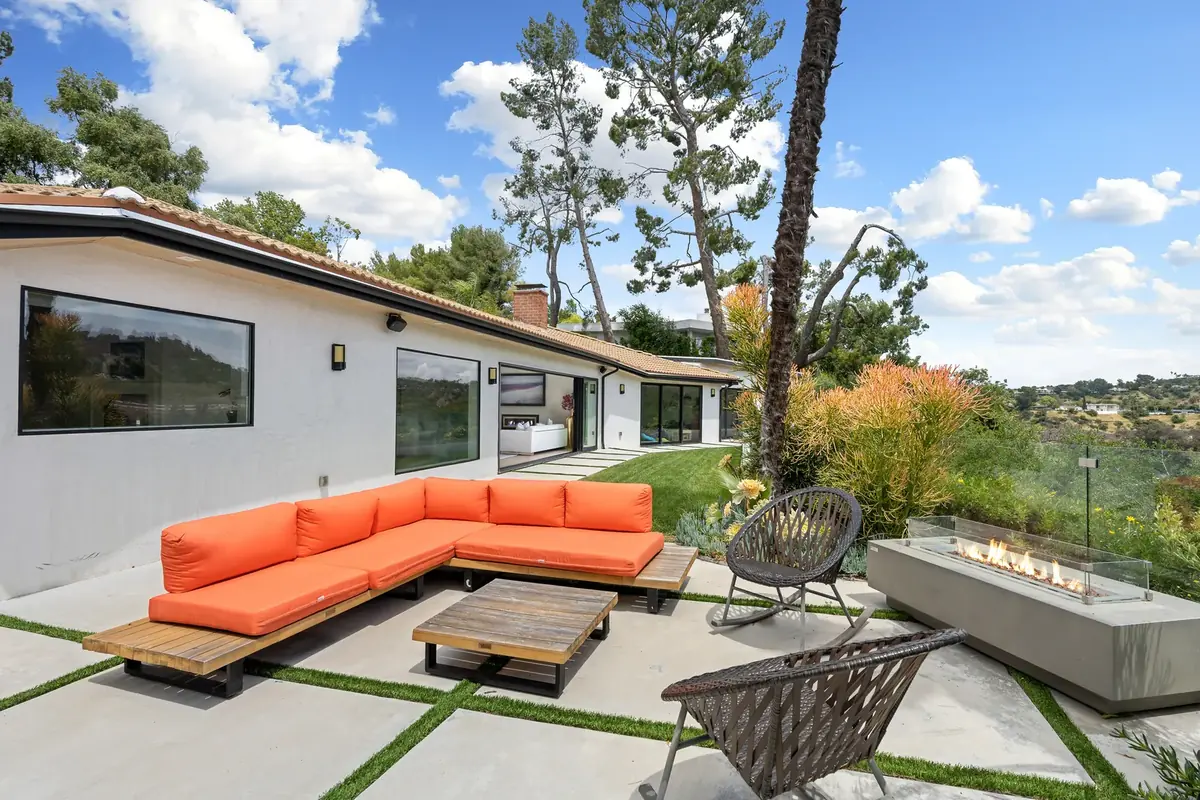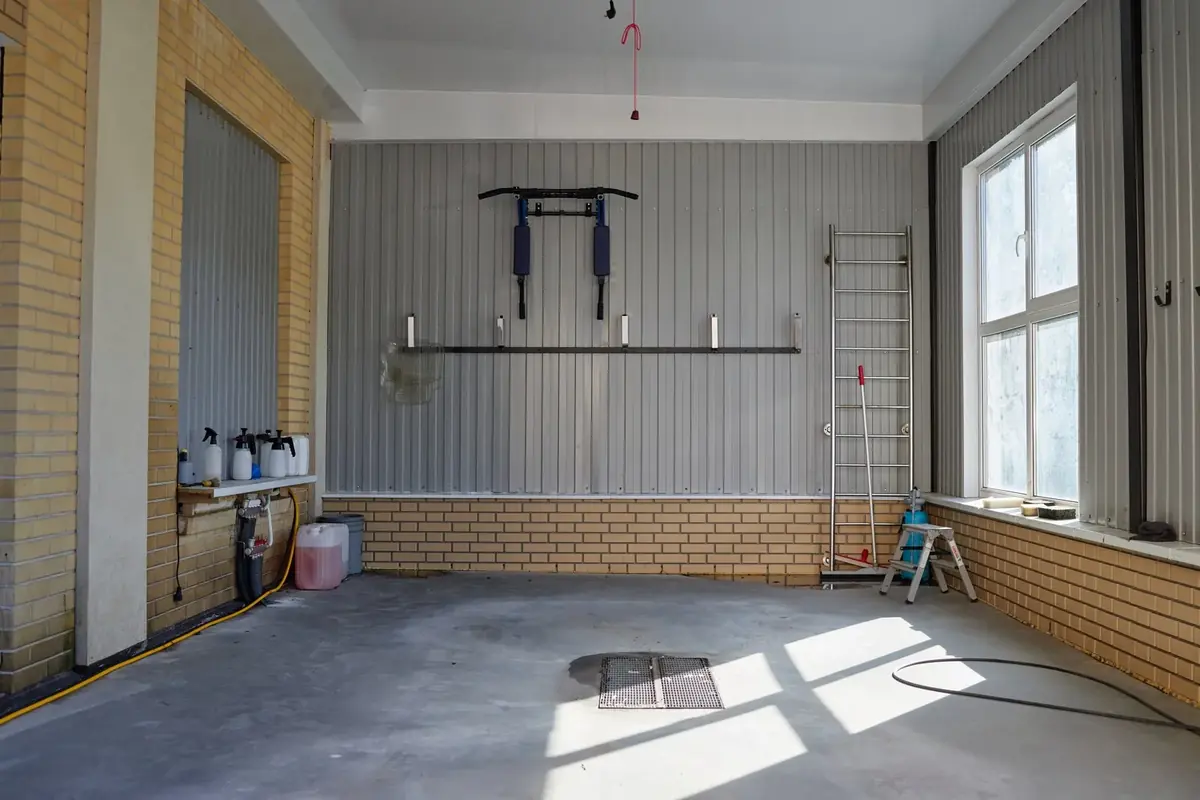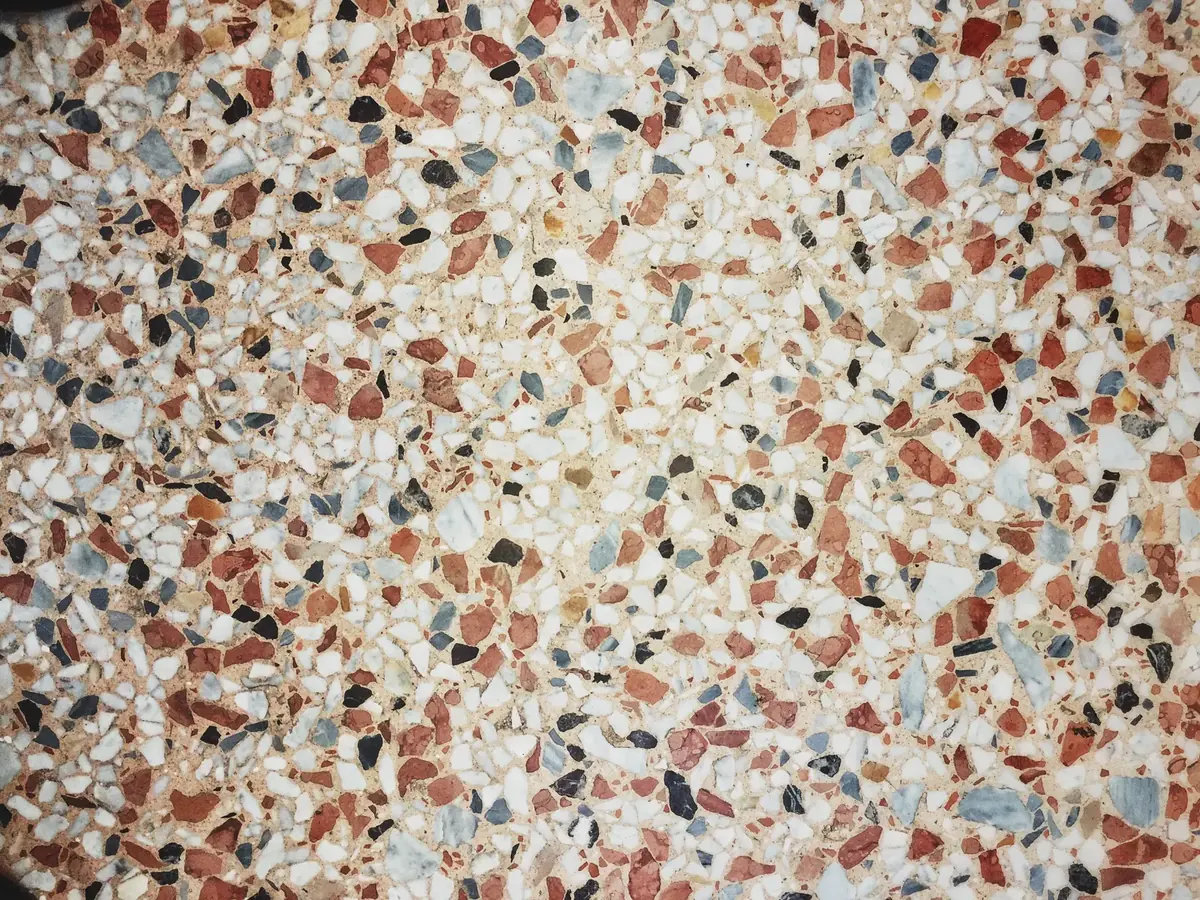
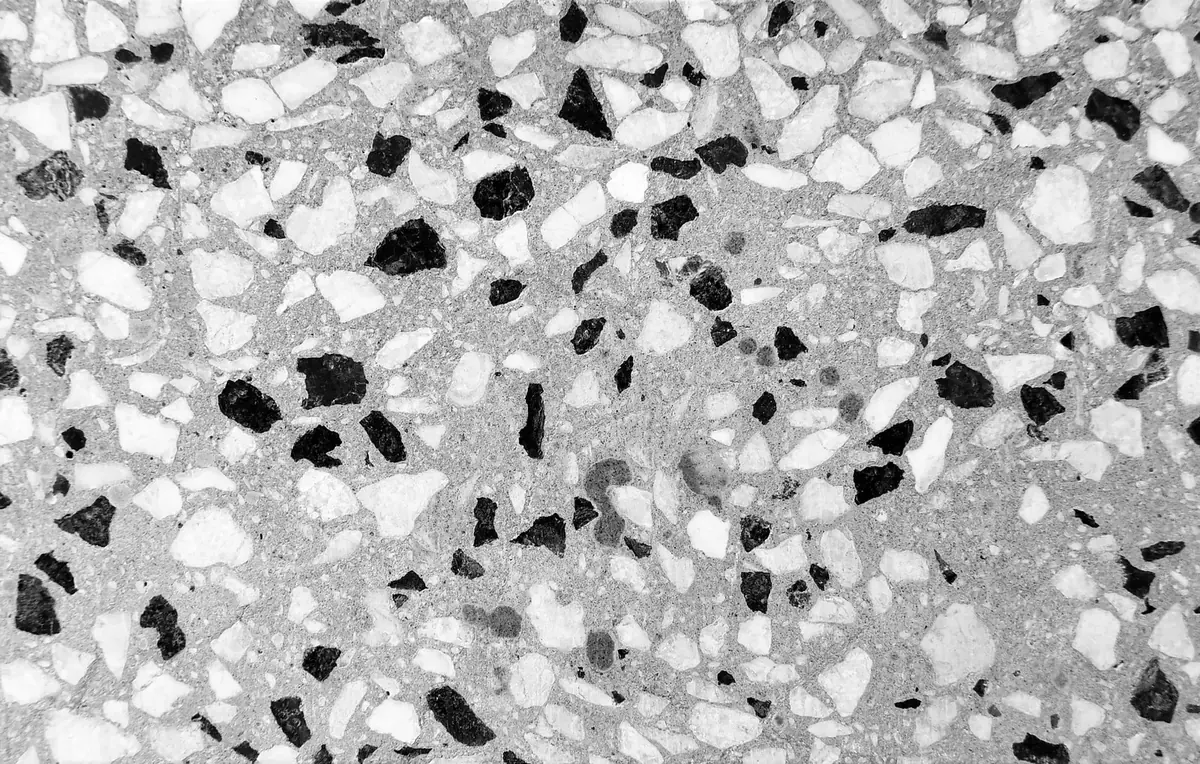
A decorative flake floor — sometimes called a chip floor — is built by broadcasting colored vinyl flakes into a wet base coat, then scraping and sealing them under a clear topcoat. The result is a speckled, granite-like surface with gentle texture underfoot. It is the most popular finish for garages for good reason: it disguises dust and minor imperfections, adds grip and looks good for everyday living.
Flake blends range from subtle to bold. In Phoenix many clients choose warm sandstone, desert beige and terracotta blends that sit comfortably with stucco and stone, while others go for crisp greys and terrazzo-look whites in modern homes. We bring physical samples so you can compare them in your own garage light.
Where flake floors shine
Residential garages
The most common application — textured, easy to clean and good at hiding dust and tire marks between cleanings.
Laundry rooms and mudrooms
Hard-working rooms that see water, dirt and frequent traffic.
Covered patios
Paired with a UV-stable topcoat, flake systems add color and texture to shaded outdoor slabs.
Workshops and hobby spaces
Shops where a forgiving, textured finish matters more than a mirror gloss.
How a flake floor is built
- 01
Grind and repair
Mechanical grinding opens the concrete; cracks, pits and joints are repaired so the base coat bonds evenly.
- 02
Pigmented base coat
A colored base coat is applied in a tone that complements the flake blend.
- 03
Flake broadcast
Flakes are broadcast by hand into the wet base — to full refusal for complete coverage, or partially for a lighter look.
- 04
Scrape and vacuum
After curing, loose and standing flakes are scraped and vacuumed to create an even surface.
- 05
Clear topcoat
A clear topcoat locks in the flake. Its thickness and texture control how smooth or grippy the floor feels.
Flake blend directions
- Sandstone and desert beige
- Terracotta, cream and charcoal
- Graphite and slate greys
- Terrazzo-look white and black
- Domino and high-contrast blends
- Custom blends to match finishes

Choosing the right blend and texture
Flake size and density change the look as much as color does. Larger flakes read as bolder and more granite-like; smaller flakes look finer and more uniform. A full broadcast gives the most texture and coverage, while a partial broadcast shows more of the base color.
Texture is adjustable. A thicker topcoat produces a smoother surface that is easier to mop; a thinner coat leaves more texture for grip. We help you balance cleanability and slip resistance for how the space is actually used.
Not sure this is the right system? Our coating systems guide compares the options side by side, or we can recommend one after seeing your floor.
Decorative Flake Floors — frequently asked questions
Are flake floors only for garages?
No. They are popular in garages, but also work well in laundry rooms, mudrooms, workshops, covered patios and some commercial spaces such as break rooms and locker rooms.
Can I choose my own flake colors?
Yes. We carry a range of standard blends and can mix custom blends. We bring physical samples so you can see them against your walls, cabinets and lighting.
Is a flake floor slippery?
Flake floors have more texture than smooth coatings, which helps underfoot. The topcoat can be adjusted for more or less texture, and anti-slip additives are available for areas that get wet.
How do I clean a flake floor?
Sweep or dust-mop regularly and mop with a pH-neutral cleaner. For garages, rinsing occasionally and using a squeegee works well.